2026 FIATA-RAP Field Meeting Special

The 2026 FIATA-Region Asia-Pacific (RAP) Field Meeting took place from 2 to 4 June in Tianjin, China, hosted by the China International Freight Forwarders Association (CIFA) and held alongside the 4th Tianjin International Shipping Industry Expo. The meeting brought together FIATA Members and the wider Asia-Pacific freight forwarding and logistics community for three days of exchange on the priorities shaping the sector, from digitalisation and trade documentation to sustainability and regional connectivity. Over the course of the meeting, delegates took part in a special joint session with the United Nations Economic and Social Commission for Asia and the Pacific (UNESCAP) to discuss transport connectivity, digital trade corridors and the future of negotiable cargo documents.
Alongside the formal programme, the FIATA delegation was received by Mr Wang Xiufeng, Vice-Mayor of Tianjin Municipality, and Mr Sun Jiannan, Director of the Tianjin Municipal Bureau of Commerce, for a closed high-level meeting. The Tianjin authorities welcomed FIATA's first participation in the Tianjin International Shipping Industry Expo and expressed their interest in strengthening cooperation with the Federation, including its participation in future editions of the event. They also set out their ambition to host more international logistics and transport events in Tianjin in the coming years.
The meeting provided an opportunity to exchange views on the challenges and opportunities facing the freight forwarding industry, and on the continued development of Tianjin Port as a major international logistics hub and its contribution to regional economic growth and global connectivity.
Wednesday 3 June
UNESCAP Session: Transport Connectivity, Digital Corridors and the Negotiable Cargo Documents Convention
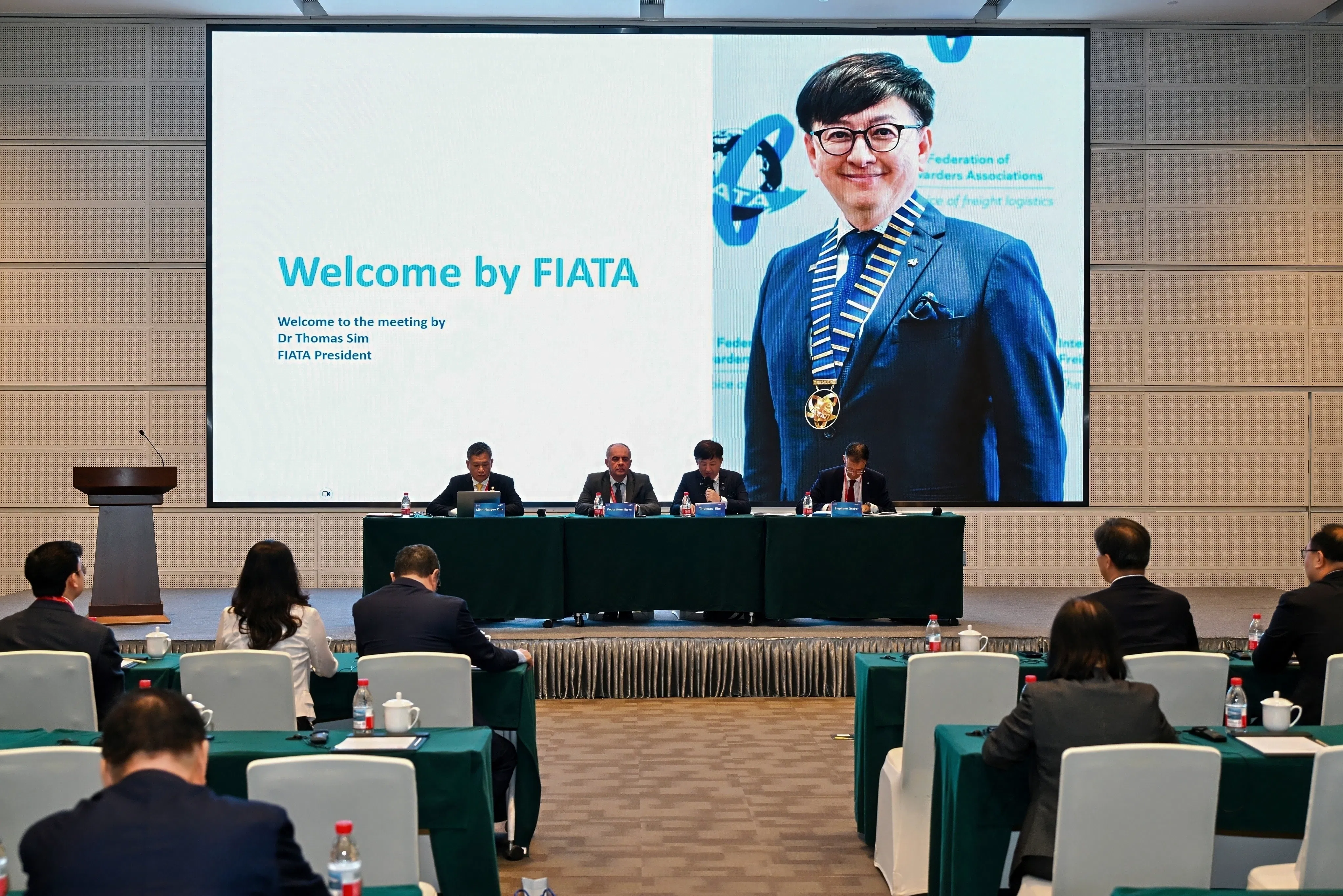
The second day of the 2026 FIATA-Region Asia-Pacific (RAP) Field Meeting was dedicated to a joint session with the United Nations Economic and Social Commission for Asia and the Pacific (UNESCAP), opened by Prof Dr Thomas Sim, FIATA President. The session brought together FIATA members, regional partners and international organisations to exchange on transport connectivity, multimodal digitalisation and the future of electronic trade documentation.
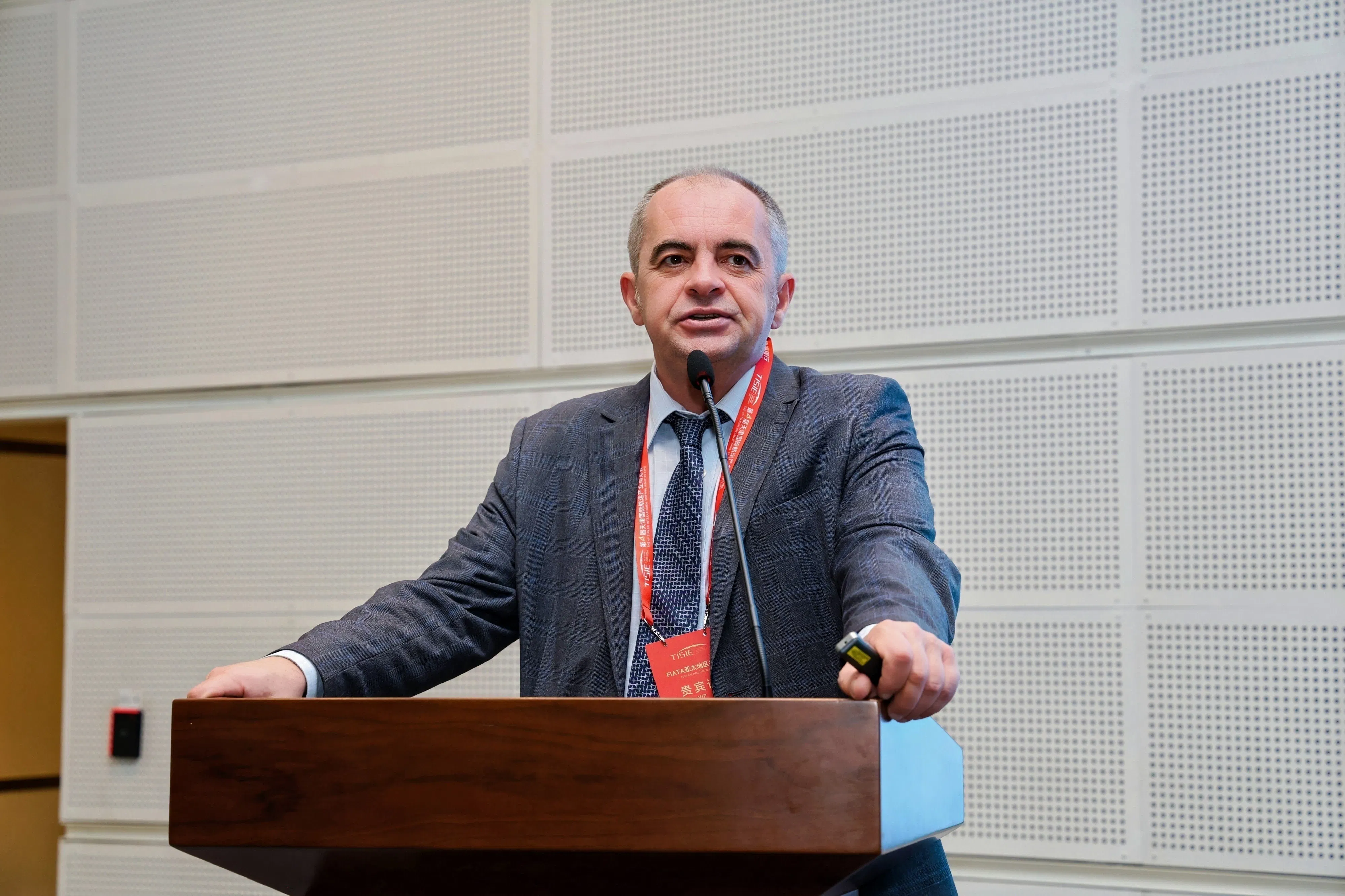
Mr Fedor Kormilitsyn, Economic Affairs Officer at UNESCAP's Transport Division.
Mr Fedor Kormilitsyn, Economic Affairs Officer at UNESCAP's Transport Division, presented the Commission's recent work on the Trans-Asian Railway (TAR) Network and dry port development, including a newly launched online database covering dry ports in North and Central Asia and Mongolia. He also outlined UNESCAP's collaboration with FIATA, the United Nations Commission on International Trade Law (UNCITRAL) and the International Chamber of Commerce (ICC) to promote the United Nations Convention on Negotiable Cargo Documents (NCD Convention), with a first regional awareness-raising workshop planned for Almaty, Kazakhstan, on 17 June 2026, and previewed preparations for the Fifth Ministerial Conference on Transport, to be held in Bangkok in November 2026.
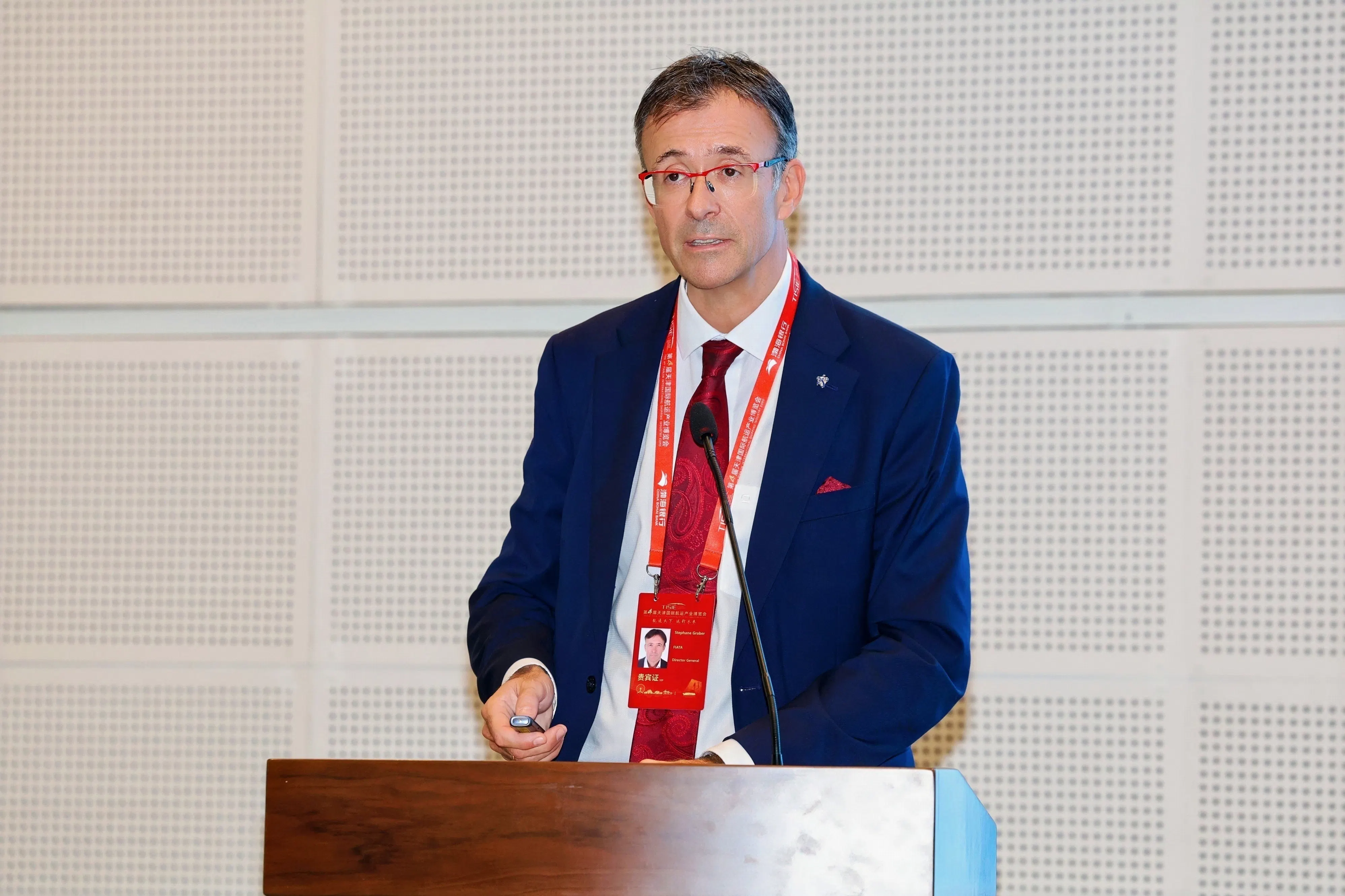
Dr Stéphane Graber, FIATA Director General.
Dr Stéphane Graber, FIATA Director General, presented FIATA's work on the FIATA electronic Bill of Lading (eFBL) as a practical enabler of the NCD Convention. He illustrated this through two real-life pilot transactions, one from Kazakhstan to China and another from Turkmenistan to Romania, which demonstrated the advantages of electronic documents over paper in terms of speed, security and efficiency. A complementary presentation on the Middle Corridor digitalisation initiative, delivered in partnership with the Global Digital Trade Centre (Global DTC), showed how a unified digital framework has reduced transit declaration processing at the China–Kazakhstan border from up to twelve hours to thirty minutes, enabling end-to-end visibility along the corridor.
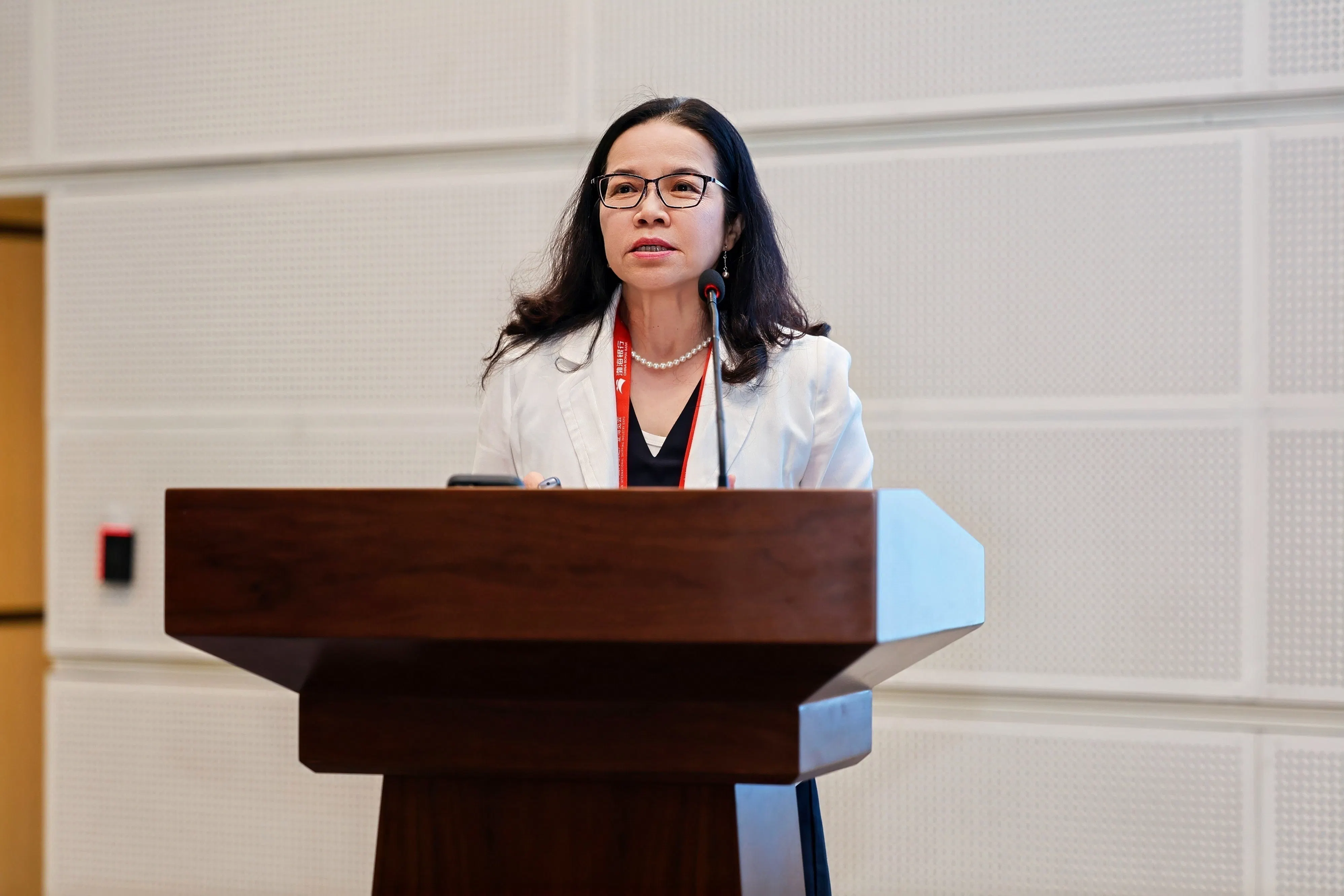
Ms Adelaide Yang, FIATA Vice-President.
Regional perspectives were provided by Ms Adelaide Yang, FIATA Vice-President, who examined the structural imbalance between Chinese Taipei's rapidly expanding high-technology sector and its more traditional freight forwarding industry, and the resulting pressures on air cargo capacity and skilled labour. She drew attention to an ageing workforce and persistent shortages of operational staff, and to the growing use of artificial intelligence (AI) and "smart port" automation as a means of easing these constraints, set against continued growth in air cargo and free-trade-zone activity.
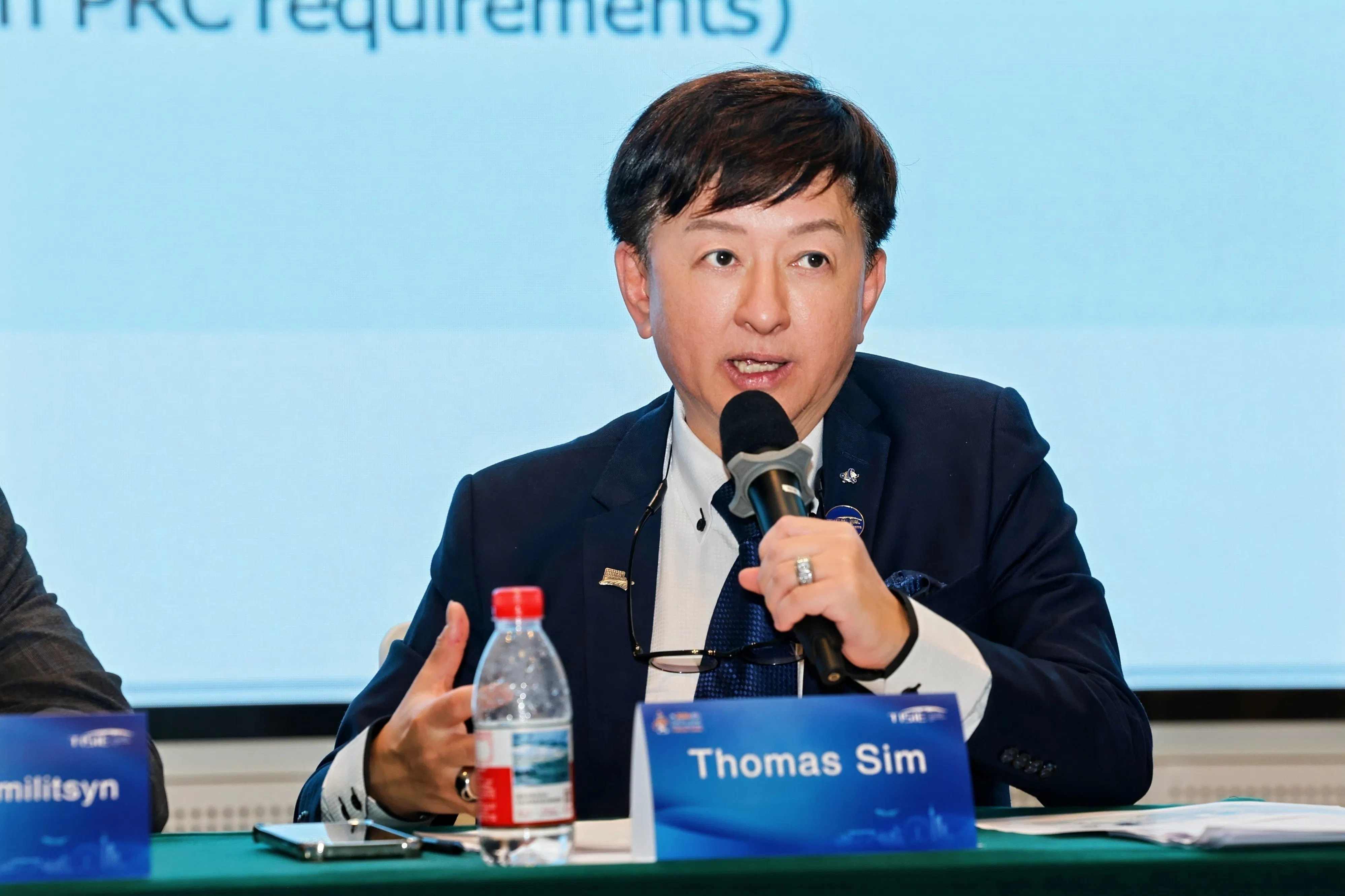
Prof Dr Thomas Sim, FIATA President.
The session concluded with a wrap-up by Prof Dr Thomas Sim and the adoption of the Tianjin Statement on Digital Trade and Transport Connectivity, in which participants reaffirmed their support for the NCD Convention, called for greater interoperability between digital systems, and underlined that trusted data and stakeholder cooperation are essential to building more resilient and sustainable supply chains.
High-Quality Development Forum: Advancing Digital Transformation in the AI Era
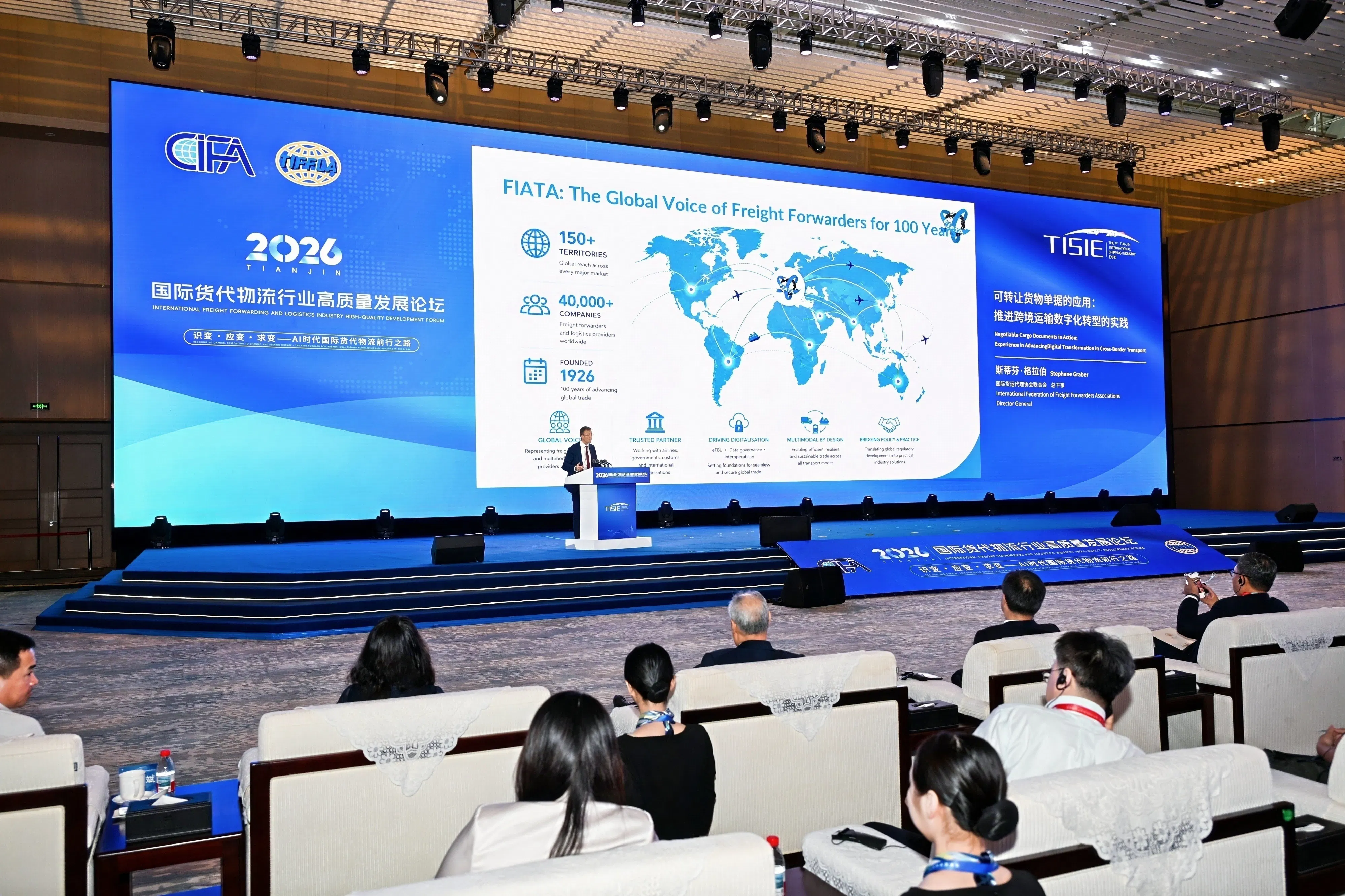
Also on the second day of the meeting, FIATA took part in the International Freight Forwarding and Logistics Industry High-Quality Development Forum, held as part of the 4th Tianjin International Shipping Industry Expo. Convened under the theme of recognising, responding to and shaping change, the forum examined the path forward for the international freight forwarding and logistics industry in the era of artificial intelligence (AI). It brought together industry leaders, technology providers and academics to consider how digitalisation, data and emerging technologies are reshaping the sector, and how freight forwarders can adapt while continuing to add value across increasingly complex supply chains.
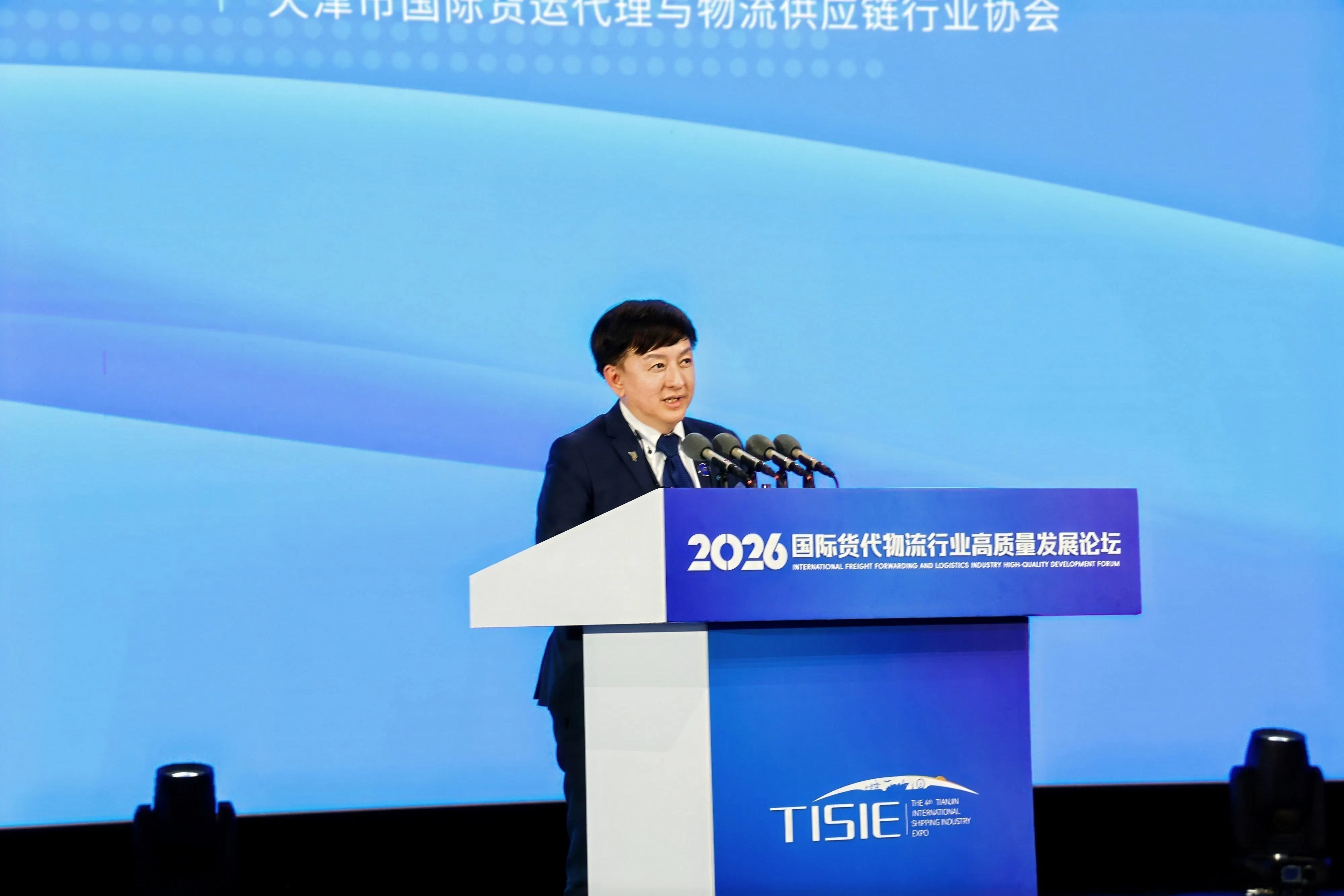
Prof Dr Thomas Sim, FIATA President.
The forum opened with a series of addresses, including from Prof Dr Thomas Sim, FIATA President. In his remarks, the FIATA President reflected on the profound transformation reshaping the industry and on the opportunities and challenges that AI presents for freight forwarders. He reaffirmed that technology should serve to empower freight forwarders rather than displace them, and underlined their enduring role at the heart of global trade as the sector continues to adapt to digitalisation and evolving operational demands.
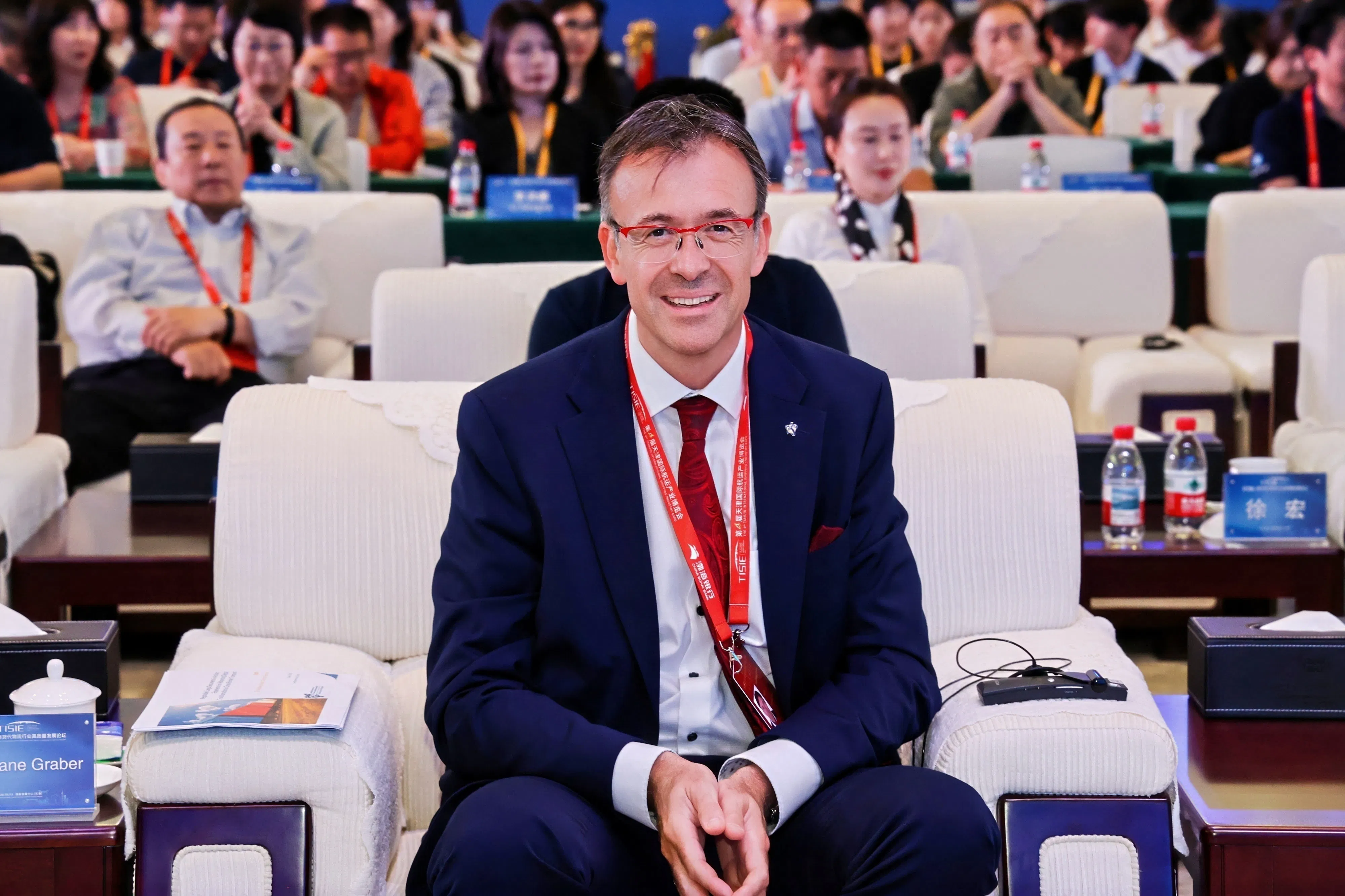
Dr Stéphane Graber, FIATA Director General.
During the presentation session, Dr Stéphane Graber, FIATA Director General, addressed the role of negotiable cargo documents in advancing digital transformation across cross-border transport. He framed resilience as today's defining trade priority, underlining that "in disrupted and compliance-driven supply chains, competitiveness depends on trusted, interoperable and actionable information flows. Frameworks such as the UNCITRAL NCD Convention combined with the eFBL support more resilient trade ecosystems by facilitating agility, multimodality, and electronic trade documentation."
Building on this, the Director General highlighted the eFBL as a globally recognised multimodal negotiable cargo document that allows freight forwarders to capture trusted shipment data at source, providing a concrete foundation for the interoperable information flows on which the sector's digital transformation depends.
Thursday 4 June
FIATA-RAP Business Session: Direct Air Waybill Advocacy, Regional Priorities and the 2027 Host Selection
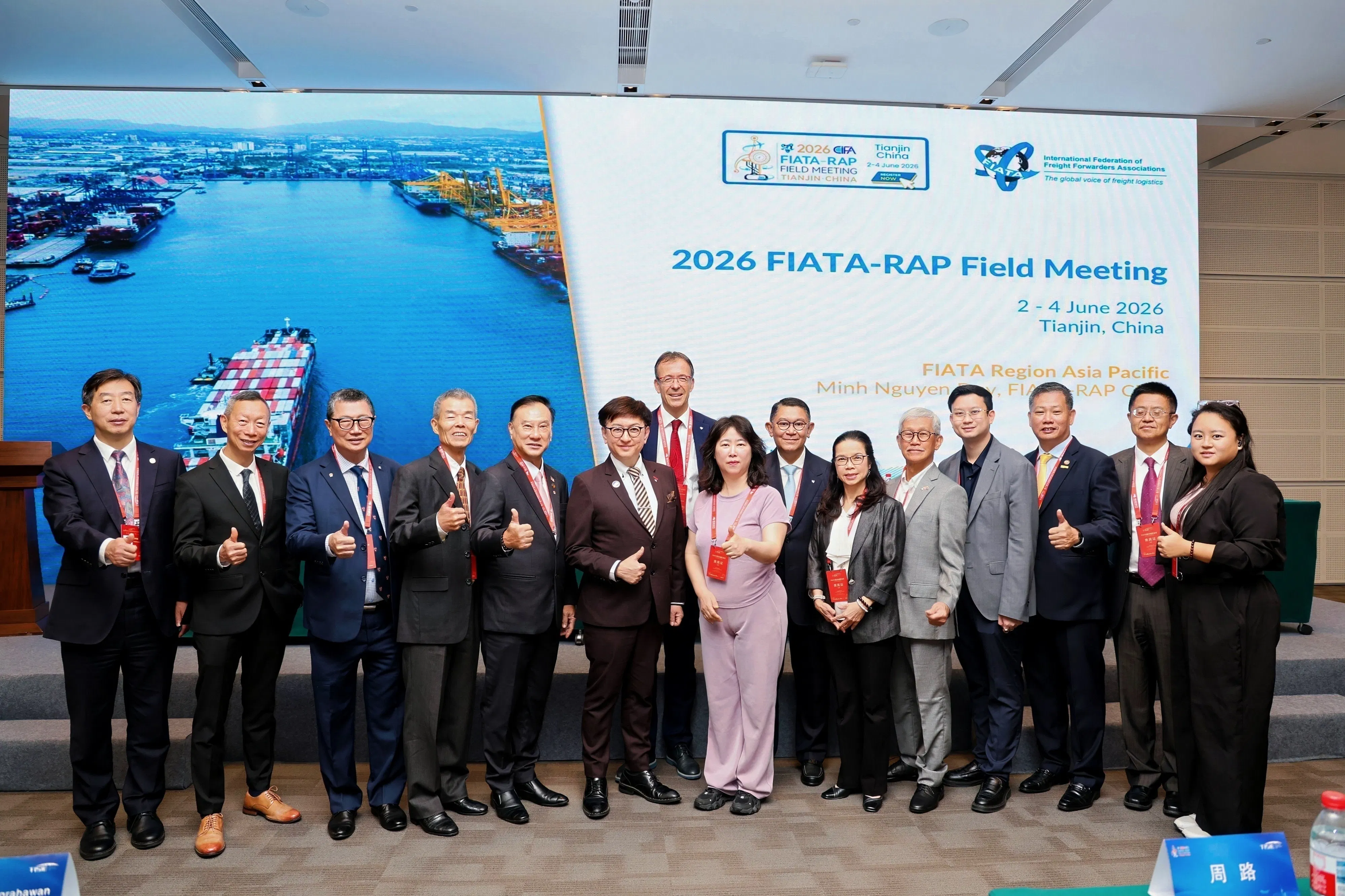
From left to right: Mr Cui Jiaguo, CIFA Secretary General; Mr Ronnie Leung, Vice-Chair, Hong Kong Association of Freight Forwarding & Logistics (HAFFA); Mr Stanley Lim, FIATA Past President; Mr Huxiang Zhao, FIATA Past President; Mr Alvin Seng Wah Chua, President of Federation of Malaysian Freight Forwarders (FMFF); Prof Dr Thomas Sim, FIATA President; Dr Stéphane Graber, FIATA Director General; enthusiastic FIATA-RAP Field Meeting Participant; Mr Yukki Nugrahawan Hanafi, FIATA Senior Vice-President; Ms Adelaide Yang, FIATA Vice-President; Mr Yeoh Kean Jin, Managing Director, Titimas Shipping & Trading Sdn Bhd; Mr Vorachit Ratanachinda, Secretary General of Thai International Freight Forwarders Association (TIFFA); Mr Minh Nguyen Duy, FIATA RAP Chair; Mr Yuntao Yang, FIATA Advisory Body on Legal Matters Chair; and Ms Samantha Sim, Business Development Supply Chain, Topocean.
The third and final day of the 2026 FIATA-Region Asia-Pacific (RAP) Field Meeting was devoted to the FIATA-RAP business session, with welcome remarks from Prof Dr Thomas Sim, FIATA President, and the meeting formally opened by Mr Minh Nguyen Duy, FIATA-RAP Chair. Following the adoption of the agenda and the validation of the minutes of the previous regional meeting of 31 March 2026, delegates received a detailed update from the FIATA Headquarters on the federation's current priorities and advocacy work.
A central part of that update concerned FIATA's response to the unilateral changes to the Direct Air Waybill (DAWB) framework adopted by the International Air Transport Association (IATA), which are due to take effect on 1 July 2026. FIATA reported that it had carried out wide-ranging consultations worldwide, engaging freight forwarders, airlines, shippers, insurers and legal specialists, to weigh the legal, operational and insurance consequences of the changes. The feedback gathered across several regions converged on a number of recurring concerns, among them a mismatch between where liability sits and who holds operational control, legal and contractual uncertainty, risks to insurance coverage and claims handling, and the possibility of market disruption arising from an accelerated timeline.
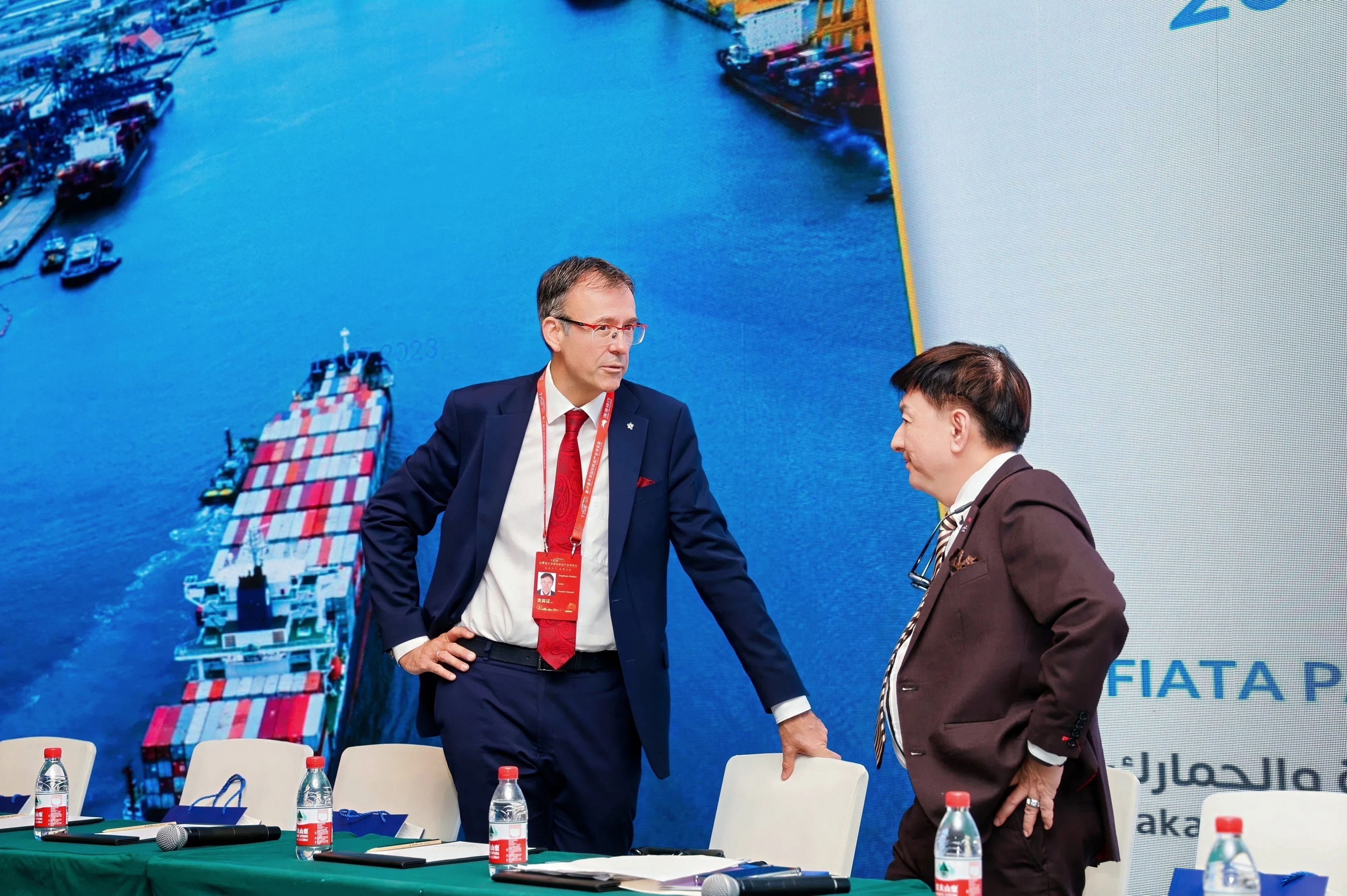
From left to right: Dr Stéphane Graber, FIATA Director General and Prof Dr Thomas Sim, FIATA President.
In response, FIATA formally triggered the official review process on 28 May, under Article 4.2 of IATA Cargo Agency Conference (CAC) Resolution 801c, and set out its position publicly through a dedicated press release the same day. The federation outlined the steps ahead, including the convening of an extraordinary review meeting in mid-June and the possible suspension of the implementation date, with the aim of arriving at a more operationally and legally workable framework. FIATA encouraged its Association Members to support this effort by sharing input from their local markets, relaying the federation's position to their national stakeholders, and directing media enquiries to FIATA to maintain a consistent message.
The headquarters update also introduced the FIATA Matrix, a structured overview of six priority areas: trade facilitation, digitalisation and trade documentation, education and training, sustainability, safety and security, and other critical issues such as the recognition of freight forwarders and the development of transport corridors. A dedicated survey was presented to help members rank these areas in order of priority. Delegates were further reminded of the upcoming 2026 Statutory General Meeting, to be held online on 26 June 2026.
The session closed with a roundtable of FIATA-RAP delegates, who shared regional updates and reflected on the shared challenges of an increasingly disrupted operating environment. A recurring theme was the worsening shortage of skilled labour, raised in particular by the Hongkong Association of Freight Forwarding and Logistics (HAFFA) and the Taiwan Freight Logistics Association (TFLA), together with the growing role of automation. The Japan International Freight Forwarders Association (JIFFA) pointed to a shift away from sheer volume towards reliability and digital integration, while the Vietnam Logistics Business Association (VLA) reported that, on 29 May, the country's Ministry of Foreign Affairs had convened a workshop on Vietnam's potential accession to the United Nations Convention on Negotiable Cargo Documents (NCD Convention).
In his closing remarks, Mr Minh Nguyen Duy, FIATA-RAP Chair, thanked the host association for organising the meeting in Tianjin, and expressed his appreciation to the delegates and speakers for their contributions over the three days. He confirmed that the next FIATA-RAP meeting would convene during the 2026 FIATA World Congress on 6 October 2026, and encouraged members to continue their engagement on the regional priorities discussed.
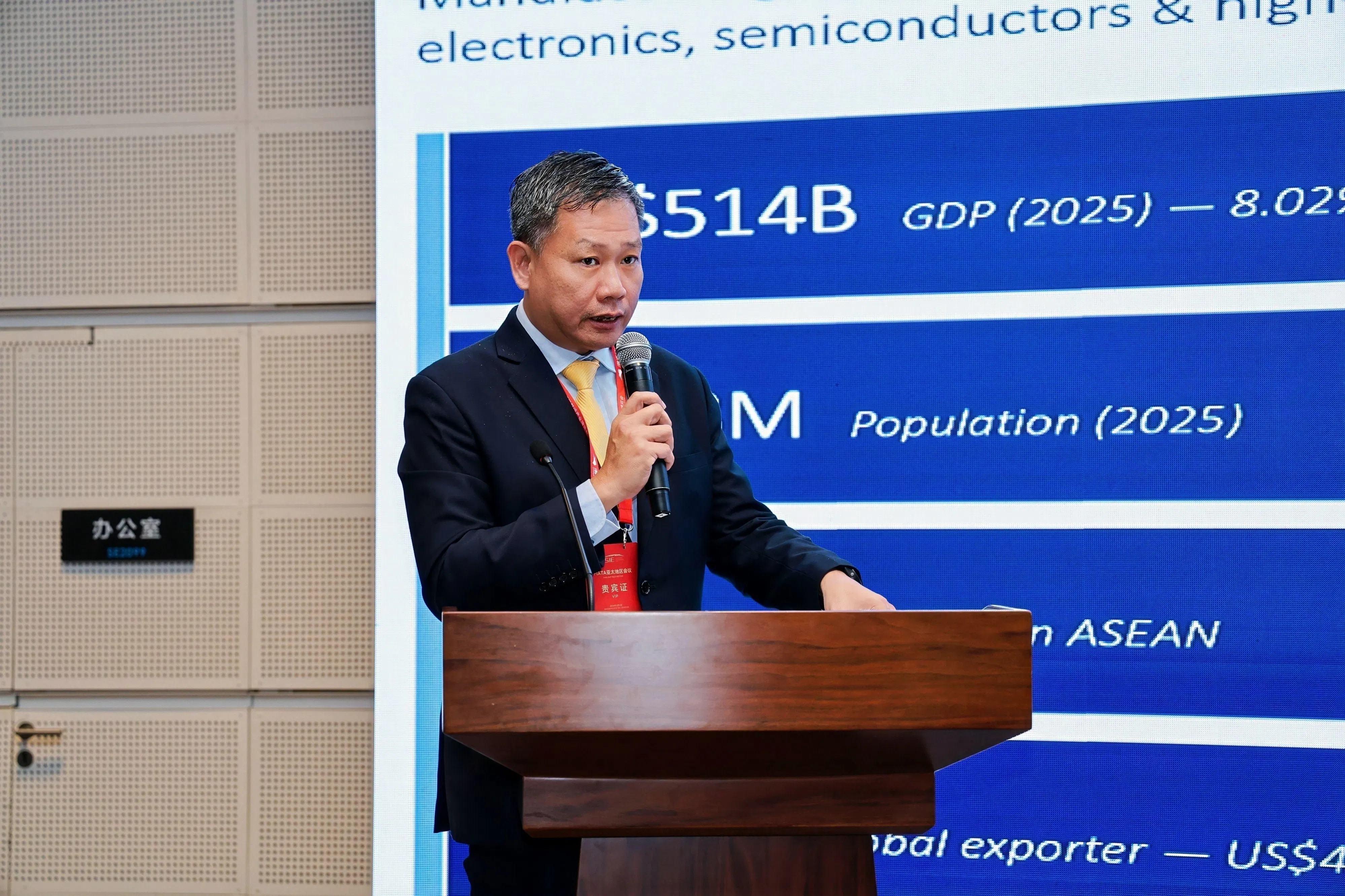
Mr Minh Nguyen Duy, FIATA RAP Chair.
FIATA High-Level Meeting with Presidents of the FIATA RAP Associations
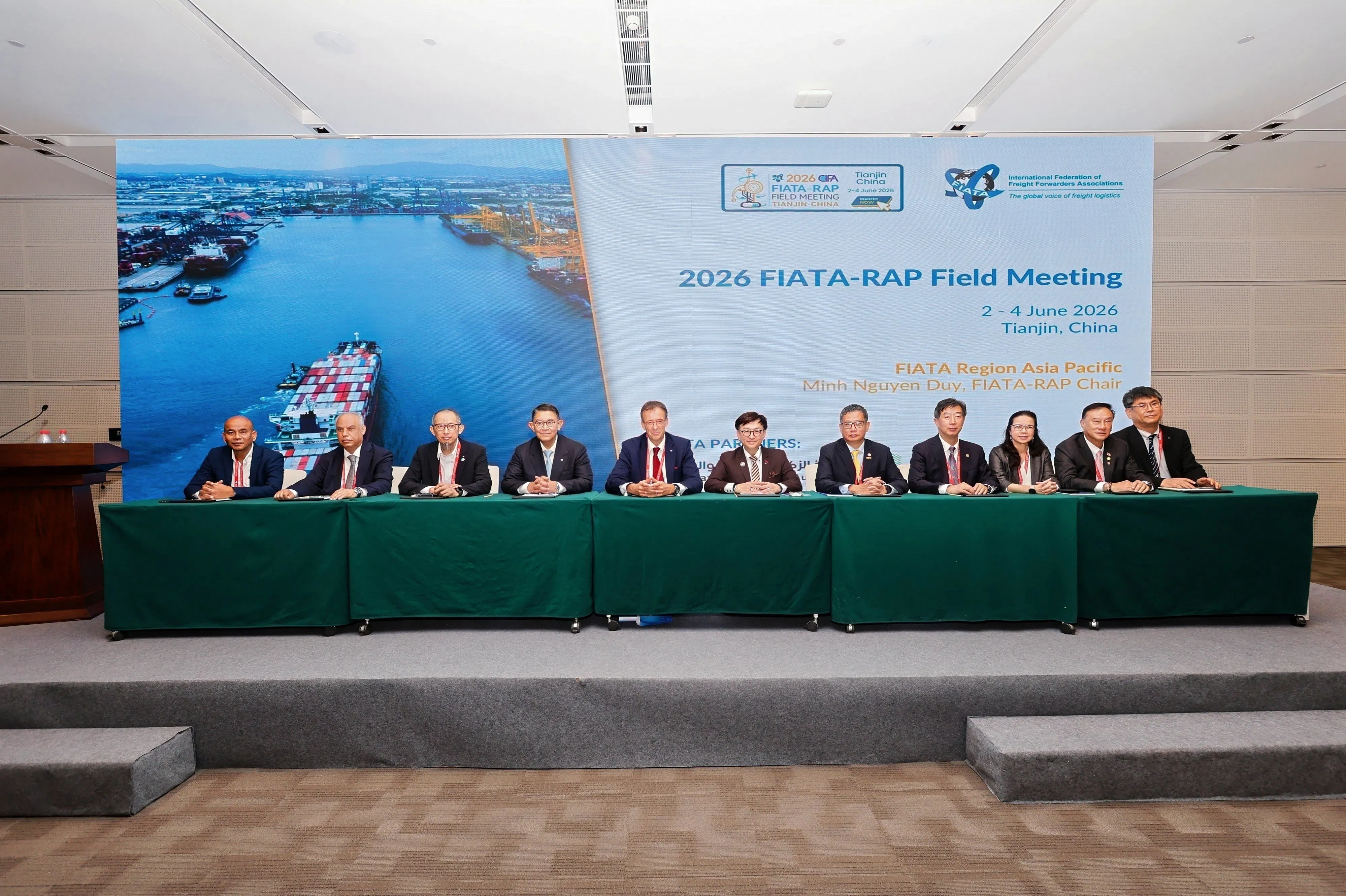
From left to right: Mr Adil Karim, Indonesian Logistics and Forwarders Association (ALFI/ILFA) Board Member; Mr Farid Saffarzadeh, FIATA Vice-President; Mr Iman Gandi Mihardja, Secretary General of ALFI/ILFA; Mr Yukki Nugrahawan Hanafi, FIATA Senior Vice-President; Dr Stéphane Graber, FIATA Director General; Prof Dr Thomas Sim, FIATA President; Mr Minh Duy Nguyen, FIATA RAP Chair; Mr Cui Jiaguo, Secretary General of CIFA; Ms Adelaide Yang, FIATA Vice-President; Mr Alvin Seng Wah Chua, President of Federation of Malaysian Freight Forwarders (FMFF); and Mr Tsutomu Yamazaki, General Manager Japan International Freight Forwarders Association (JIFFA).
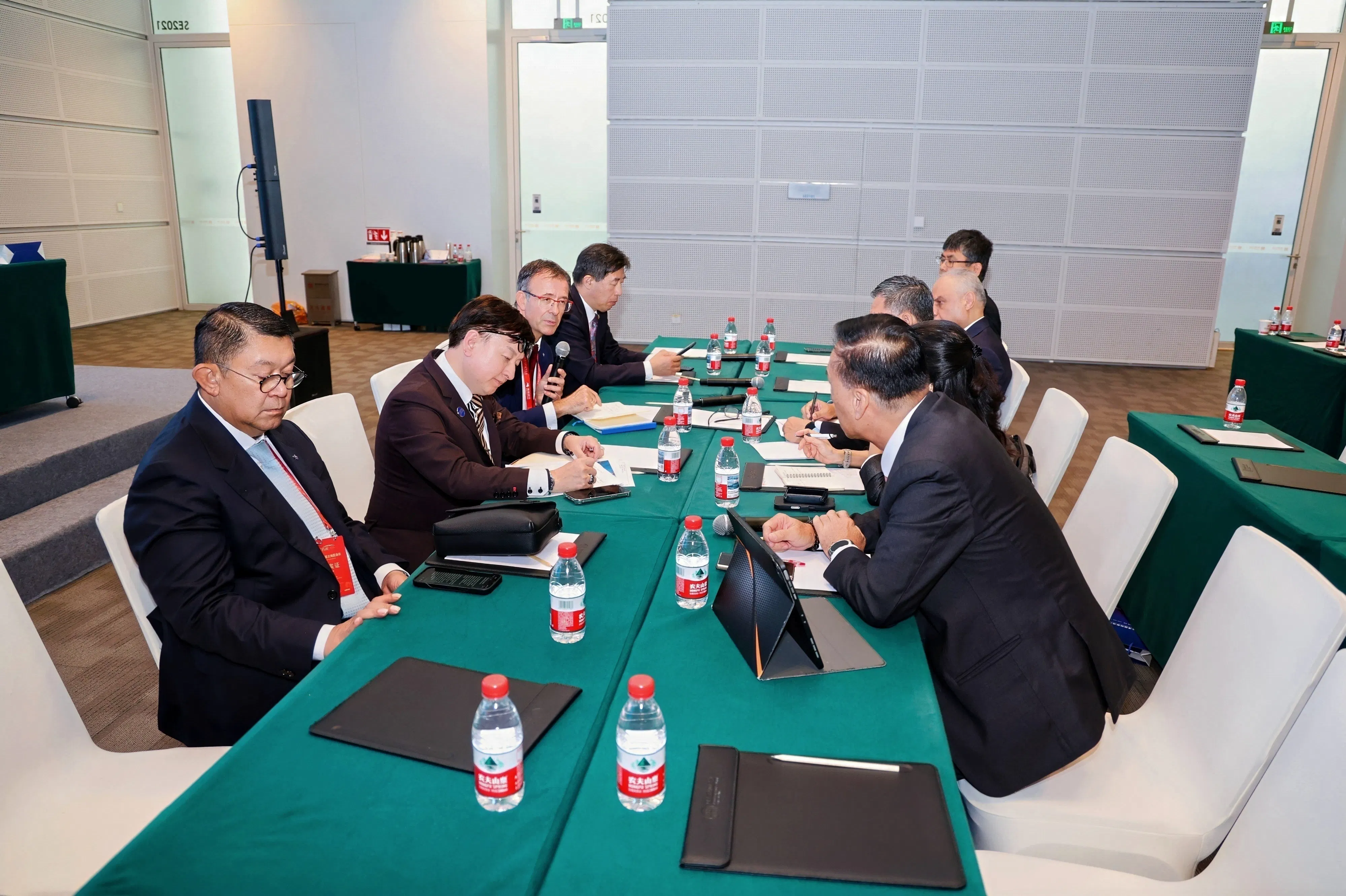
A dedicated meeting of the Presidents of the FIATA Region Asia-Pacific Associations provided an opportunity for a focused exchange on the priorities shaping the freight forwarding sector across the region. Participants discussed the importance of coordinated advocacy, closer cooperation within the region, and stronger engagement with industry stakeholders in addressing the operational and regulatory challenges affecting regional connectivity and trade flows. The meeting also underlined the value of professional education, training and capacity building, and of continued collaboration between FIATA, its Association Members and regional partners in strengthening professional standards and supporting freight forwarders as they adapt to a rapidly evolving operating environment.
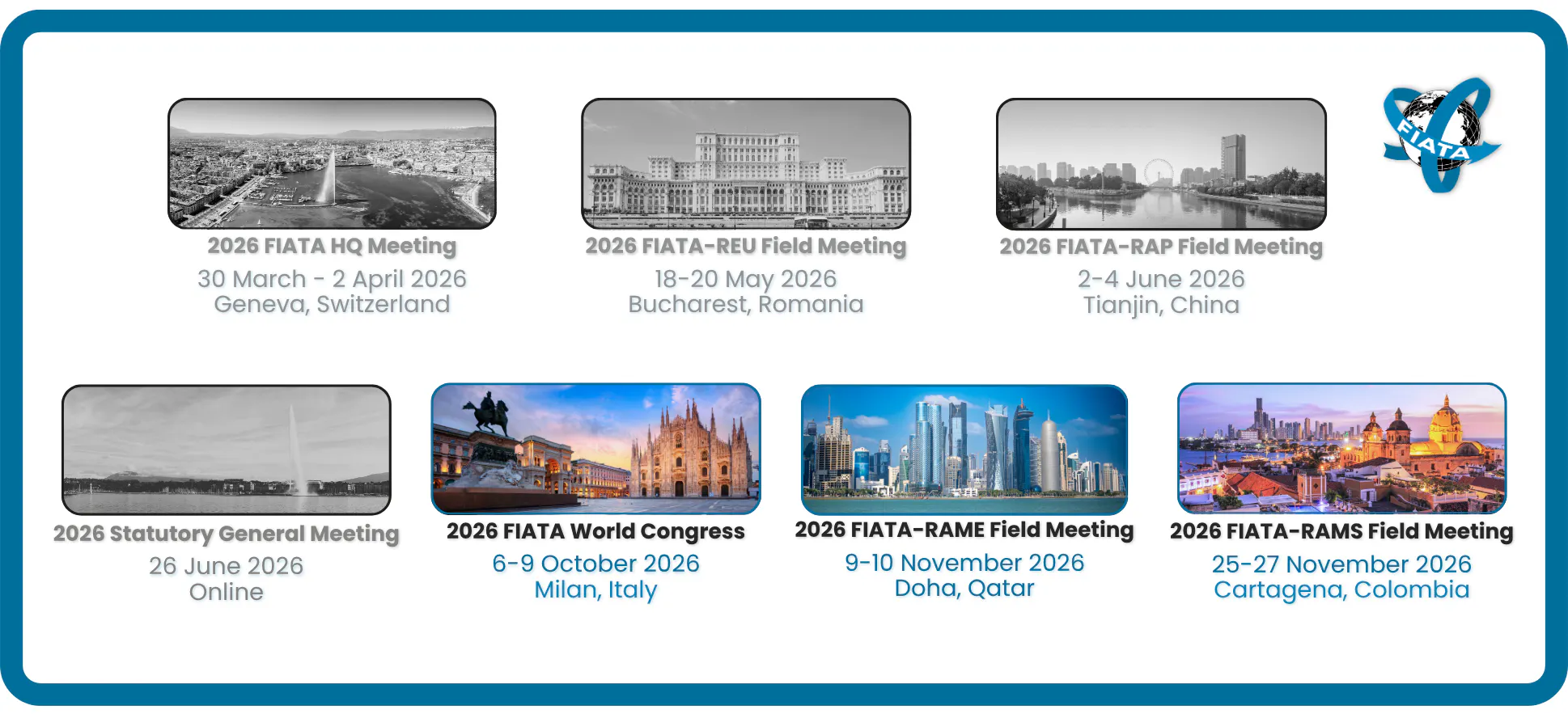
Upcoming FIATA Events